


Cerapure‑AC™
Cerapure-AC is a premium multi-function filter media used for biofouling prevention, chlorine and chloramine reduction, and SDI control (5 micron). Ideal media for systems which are “off-line” or on standby for long periods of time.
Overview: What Is Cerapure‑AC?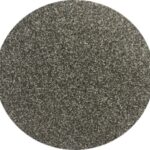
Originally developed for commercial and industrial pretreatment applications, Cerapure AC has proven to be a strong fit for RO and NF pretreatment, whole-house RO systems, and installations where traditional granular activated carbon (GAC), KDF, or multimedia filters struggle due to biological growth, excessive backwash demand, or intermittent operation.
Cerapure‑AC™ is a hard ceramic granule permanently fused with a reactive copper‑zinc alloy and catalytic carbon. The alloy drives fast redox reactions for chlorine and chloramine reduction and provides a bacteriostatic effect. The small, uniform particles act as a fine mechanical filter that helps reduce SDI ahead of membranes.
The “AC” in Cerapure-AC refers to Alloy + Carbon, both permanently bonded to each ceramic particle.
Why Ceramic Matters
The ceramic substrate offers high surface roughness and surface area. By using a smaller, more uniform particle size, Cerapure AC provides improved particulate capture and storage, tighter filtration (10 micron nominal, often finer), lower uniformity coefficient, and reduced backwash rates. Despite tighter filtration, void space remains comparable to other granular filters—the voids are simply smaller and more evenly distributed.
Copper-Zinc Alloy Function
The copper-zinc alloy serves multiple roles including oxidant reduction, surface interaction with certain heavy metals, and bacteriostatic performance. Copper provides a halo effect that inhibits biological growth across the filter bed. Because the alloy is bonded to the ceramic substrate, it remains evenly distributed and does not migrate or settle like loose alloy media.
Catalytic Carbon Role
Catalytic carbon supplements oxidant reduction while minimizing common GAC problems such as biological growth during idle conditions, odor issues, and the need for aggressive backwashing.
Biology Control & RO Protection
Traditional carbon beds often become biological reactors, especially under intermittent flow or warm conditions. Cerapure AC is bacteriostatic by design, inhibiting biological growth and reducing the risk of biofilm sloughing into downstream RO and NF membranes.
High-TDS Pretreatment Considerations
As TDS increases, filtration of fine particulate and colloids becomes more difficult. Cerapure AC’s tighter ceramic filtration helps improve SDI control, reduce membrane fouling risk, and support stable RO performance.
Composition:
- Reactive Cu/Zn alloy (≈50/50, lead‑free): accelerates oxidant reduction; copper imparts bacteriostatic behavior.
- Activated carbon: enhances kinetics and reduces overall particle density.
- Ceramic substrate: extremely hard, low uniformity coefficient, resists attrition and channels; lowers required backwash rate vs. typical GAC.
Performance
Backwash expansion curves and pressure‑drop charts. See brochure: Cerapure-AC
Backwash & Hydraulic Performance
Cerapure AC backwashes at approximately 10–12 gpm/ft², significantly lower than most GAC and multimedia filters. Uniform particle sizing allows the bed to remix during backwash, helping keep the media clean and evenly distributed.
Operating Conditions
Product Specifications - Cerapure-AC
| Parameter | Cerapure-MAC |
|---|---|
| Effective Size (Multiple available) | 0.25 mm - 0.30 mm |
| Uniformity Coefficient | <1.4 (1.25 typical) |
| Density | 89 lbs./cu.ft. |
| Recommended Bed Depth | 24" |
| Recommended Service Flow | 8.0 gpm/ft² |
| Backwash Rate | 10-12 gpm/ft² |
| Operational pH | 6.5 - 9.5 |
| Screen Grade (dry) | 50 x 60 mesh |
| Max. DP Across Bed | 30 psi |
| Packaging | 43 lb. bag (0.50 cu.ft.) |
Sizing & Flow
Chlorine Reduction & Filtration Sizing
| Tank Diameter | Area (ft^2) | Service @ 9 gpm/ft^2 (gpm) | Backwash @ 11 gpm/ft^2 (gpm) |
|---|---|---|---|
| 10 in | 0.55 | 5.0 | 6.1 |
| 12 in | 0.79 | 7.1 | 8.7 |
| 13 in | 0.92 | 8.3 | 10.1 |
| 14 in | 1.07 | 9.6 | 11.8 |
| 16 in | 1.4 | 12.6 | 15.4 |
Chloramine Reduction* & Filtration Sizing
| Tank Diameter | Area (ft^2) | Service @ 6 gpm/ft^2 (gpm) | Backwash @ 11 gpm/ft^2 (gpm) |
|---|---|---|---|
| 10 in | 0.55 | 3.3 | 6.1 |
| 12 in | 0.79 | 4.7 | 8.7 |
| 13 in | 0.92 | 5.5 | 10.1 |
| 14 in | 1.07 | 6.4 | 11.8 |
| 16 in | 1.4 | 8.4 | 15.4 |
*For chloramine reduction and improved kinetics, we suggest using catalytic carbon media. (Centaur)
Use actual water temperature to refine backwash rates (colder water → higher gpm/ft² required for the same expansion).
Cerapure-AC Applications
Commercial/Industrial
- RO & NF pretreatment
- Replacement for multimedia + GAC trains
- Intermittent or high-temperature systems
- Limited backwash availability
Residential
- Whole-house RO pretreatment
- City-water dechlorination without biological risk
- Well water with sediment (non-iron / non-manganese)
- Situations where KDF is too heavy or impractical
⚠️ Safety Note: Not for use with water that is microbiologically unsafe or of unknown quality without adequate disinfection before or after the system.
Cerapure-AC FAQs
Q: What is Cerapure‑AC made of?
A: A ceramic core fused with a copper‑zinc alloy and activated carbon.
Q: How long does the media last?
A: Typically 5–7 years (application dependent).
Q: What are the startup steps?
A: Cerapure-AC does not require “conditioning” at installation, just backwash it and put it into service.
Q: Does it help with H₂S?
A: Yes. Copper forms copper sulfide in‑bed; upstream oxidation and regular backwash improve results.
References & Further Reading
- Cerapure‑AC brochure and FAQ (materials safety, sizing, performance, operating conditions).
- IAPMO R&T on NSF/ANSI 61 (materials safety). Link to the IAPMO Certification
Downloads