


Cerapure-MAC
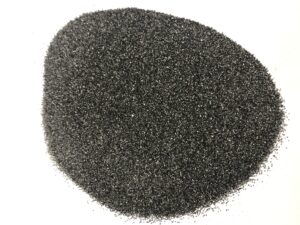
Cerapure-MAC is a ceramic filtration media permanently bonded with manganese dioxide, catalytic carbon, and a copper-zinc alloy. Each ceramic grain functions as a high-surface-area reaction site for oxidation and particle capture while resisting biological overgrowth.
MAC stands for Manganese Dioxide + Alloy + Carbon — all integrated onto a durable ceramic substrate.
Why Ceramic Matters
The ceramic substrate provides tight particulate filtration (10 micron nominal, often finer) combined with high surface roughness and uniform particle sizing. This allows Cerapure-MAC to intercept and temporarily store very fine oxidized particles that commonly bypass conventional oxidation filters.
By using a smaller, more uniform particle size, Cerapure-MAC delivers improved kinetics, higher effective surface area, and more predictable hydraulics without excessive pressure loss.
Oxidation & Media Function
Cerapure-MAC is designed for systems where dissolved oxygen or injected oxidants are present. Manganese dioxide provides oxidation sites, catalytic carbon enhances oxygen transfer, and the copper-zinc alloy helps prevent biological overgrowth that can insulate oxidation media and reduce effectiveness over time.
Primary functions include:
- Oxidation and removal of iron and manganese
- Hydrogen sulfide reduction
- Fine particulate filtration (<10 microns)
- Protection of downstream carbon or polishing filters
Biology Control Advantage
A major cause of oxidation filter failure is biological growth on the media surface, especially in air-injection, ozone, or peroxide systems. Warm, oxygen-rich water promotes biofilm formation that reduces active surface area.
Cerapure-MAC incorporates a copper-zinc alloy bonded to every ceramic grain, creating a bacteriostatic “halo effect” throughout the entire bed. This helps preserve oxidation performance and extend media life.
Cerapure-MAC Applications
Residential
- Well water with iron, manganese, or hydrogen sulfide
- Air injection, ozone, or peroxide oxidation systems
- Systems where iron breakthrough occurs with conventional media
Commercial / Industrial
- Pretreatment ahead of carbon filters
- Oxidation systems with limited backwash capacity
- Applications requiring fine particulate control
- Eliminates oxidants from feed water including chlorine, chloramine, ozone, and hydrogen peroxide.2
- Membrane pretreatment (Lower SDI): >90% removal of 5-micron particles; 99% removal of 10-micron particles
Features & Benefits
- Ideal for potable water applications using dissolved air (ozone, AIO) or chemical oxidants (chlorine, chloramine, peroxide) for pre-oxidation of iron, manganese, and hydrogen sulfide
- Removes manganese and iron, reduces oxidation levels, and prevents oxidants from entering the treated water effluent.2
- Uses a lead-free copper & zinc alloy to prevent biological fouling and support longer active life
- Tested to confirm reduction of bacterial content
- Eliminates potential for iron bacterial overgrowth
- Significantly improved filtration performance compared to MnO2 medias
- Small effective size and low uniformity coefficient ensures excellent particle removal and retention
- Can be used as a direct replacement for existing iron removal filters
- NSF/ANSI-61 Certified
- Typical operating life is 5–7 years
- pH should exceed 6.5
- Will not increase pH
- No maximum temperature limit
- Very durable; resists breakdown under high differential pressure and flow rates
- Cerapure-MAC-UA Spec Sheet
Backwash & Hydraulic Performance
Design considerations:
- Target ≥30% bed expansion to achieve full fluidization
- Typical backwash rates: ~8–10 gpm/ft²
- Use matched fine garnet underbedding (#36)
- Avoid bottom-plate or Vortech-style distributors
- Hub-and-lateral or cone-style distributors recommended
Proper backwashing is critical — Cerapure-MAC is a temporary particle storage device and must be fully cleaned to maintain long-term performance.
Operating Parameters
Operating data:
Product Specifications - Cerapure-MAC
| Parameter | Cerapure-MAC |
|---|---|
| Effective Size | 0.25 mm - 0.30 mm |
| Uniformity Coefficient | <1.4 (1.25 typical) |
| Density | 89 lbs./cu.ft. |
| Recommended Bed Depth | 24" |
| Recommended Service Flow | 8.0 gpm/sq.ft. |
| Backwash Rate | 10-12 gpm/sq.ft. |
| Operational pH | 6.5 - 9.5 |
| Screen Grade (dry) | 50 x 60 mesh |
| Max. DP Across Bed | 30 psi |
| Packaging | 44 lb. bag (0.50 cu.ft.) |
- Requires minimal pre-conditioning at installation
- Cerapure-MAC has an exceptionally reactive surface area making it excellent for oxidizing dissolved metals.3
- Backwash & Pressure Drop Curves
- Cerapure-MAC FAQ
Notes
- Patent Pending
- In applications where disinfection is required, position disinfection equipment after Cerapure-MAC.
- Various effective sizes and uniformity coefficients are available upon request.